Institute of Energy, Environment, and Economy, Tsinghua University

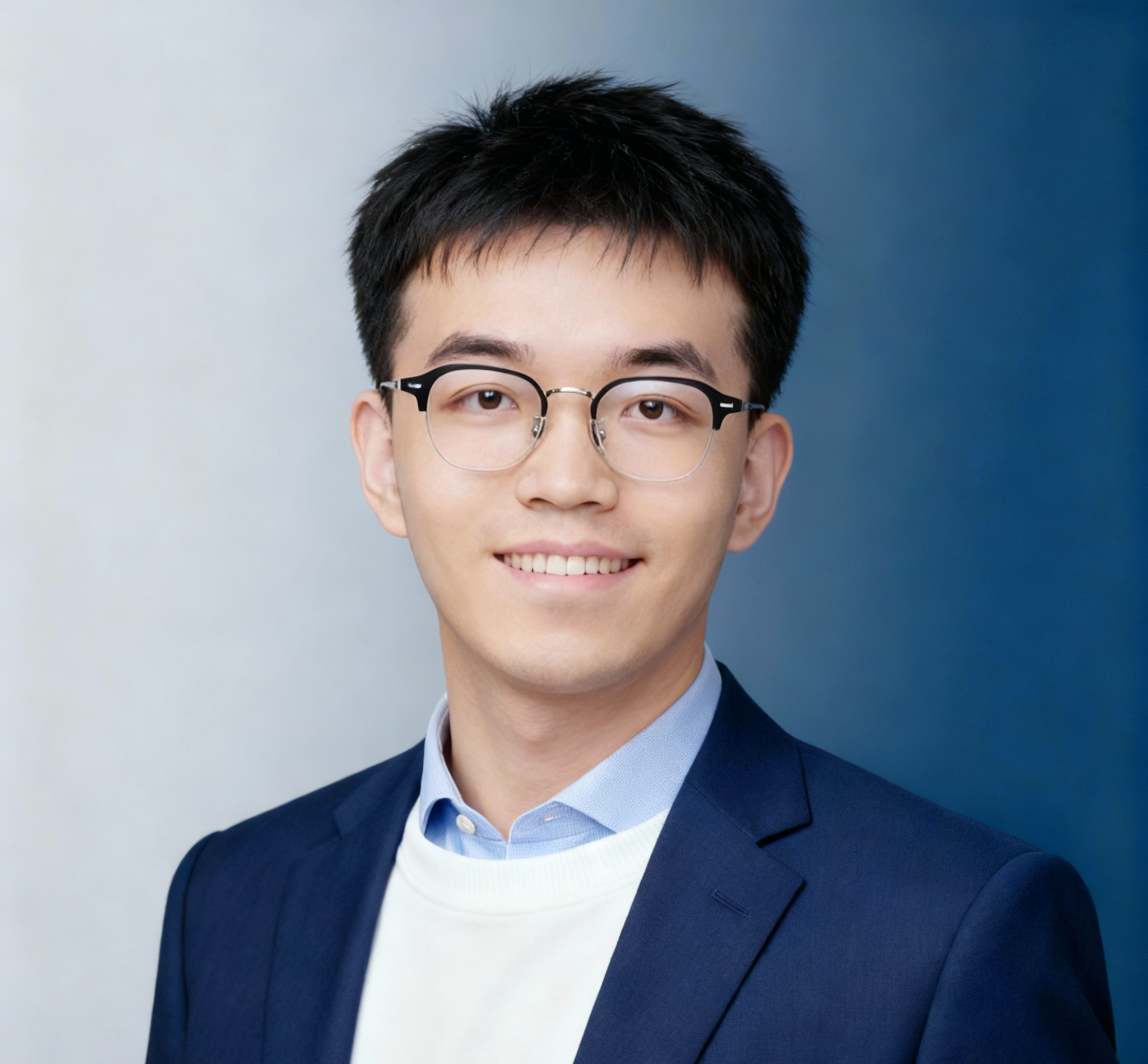
Ph.D. candidate in Management Science and Engineering at Tsinghua University. My research focuses on transport-energy system modeling, with particular interests in China's transport decarbonization pathways, electric vehicle charging and power system interactions, and hydrogen-based fuels for ports and airports.
I work on techno-economic analysis and integrated assessment using optimization and data-driven methods to study how low-carbon transport transitions interact with power systems, infrastructure planning, and climate policy.
Research Interests
- China's transport decarbonization pathways and provincial energy transition
- Electric vehicle charging, V2G, and power system flexibility
- Hydrogen and hydrogen-based fuels for ports and airports
- Integrated energy system modeling and climate policy analysis
Education
-
Tsinghua UniversityInstitute of Energy, Environment, and Economy
Ph.D. in Management Science and EngineeringSep. 2023 - present -
Tongji UniversityB.Eng. in Vehicle EngineeringSep. 2018 - Jun. 2023
Experience
-
National Key R&D Program of ChinaCore Member - CCUS Technology Assessment2023 - present
-
The World Bank GroupResearcher - Green China Project2023
-
European Commission (DG CLIMA)Core Member - COMMITTED Project2022 - 2023
Honors & Awards
-
National Scholarship2022
-
National Scholarship2021
-
Shanghai Outstanding Graduate2023
News
Selected Publications (view all )
The role of shared autonomous electric vehicles in decarbonizing China's passenger transport sector
Qi Ding, Jinhui Ren, Shu Zhang, Wenying Chen
Applied Energy, 422 (2026) 128259.
Extends China TIMES 2.0 to assess how shared autonomous electric vehicles could reduce fleet size, final energy use, material demand, and upstream emissions under China's long-term decarbonization pathways.
The role of shared autonomous electric vehicles in decarbonizing China's passenger transport sector
Qi Ding, Jinhui Ren, Shu Zhang, Wenying Chen
Applied Energy, 422 (2026) 128259.
Extends China TIMES 2.0 to assess how shared autonomous electric vehicles could reduce fleet size, final energy use, material demand, and upstream emissions under China's long-term decarbonization pathways.
Retired Battery Supply and Energy Storage Demand in China: A Provincial-Scale Assessment
Qi Ding, Wenying Chen
Energy Proceedings, 65 (2026)
Assesses the provincial-scale evolution of retired electric-vehicle battery supply and stationary energy-storage demand in China, with attention to their spatial and temporal mismatch.
Retired Battery Supply and Energy Storage Demand in China: A Provincial-Scale Assessment
Qi Ding, Wenying Chen
Energy Proceedings, 65 (2026)
Assesses the provincial-scale evolution of retired electric-vehicle battery supply and stationary energy-storage demand in China, with attention to their spatial and temporal mismatch.
Assessing China's Province-Coordinated Power System Carbon-Neutral Transition Pathway
Wenying Chen, Shu Zhang, Qiang Zhang, Jinhui Ren, Qi Ding
Journal of Energy and Climate Change, 1(1) (2025) 1-15.
Uses the China TIMES-30PE model to assess coordinated provincial power-system transition pathways, including renewable deployment, interprovincial transmission, storage, and investment needs.
Assessing China's Province-Coordinated Power System Carbon-Neutral Transition Pathway
Wenying Chen, Shu Zhang, Qiang Zhang, Jinhui Ren, Qi Ding
Journal of Energy and Climate Change, 1(1) (2025) 1-15.
Uses the China TIMES-30PE model to assess coordinated provincial power-system transition pathways, including renewable deployment, interprovincial transmission, storage, and investment needs.